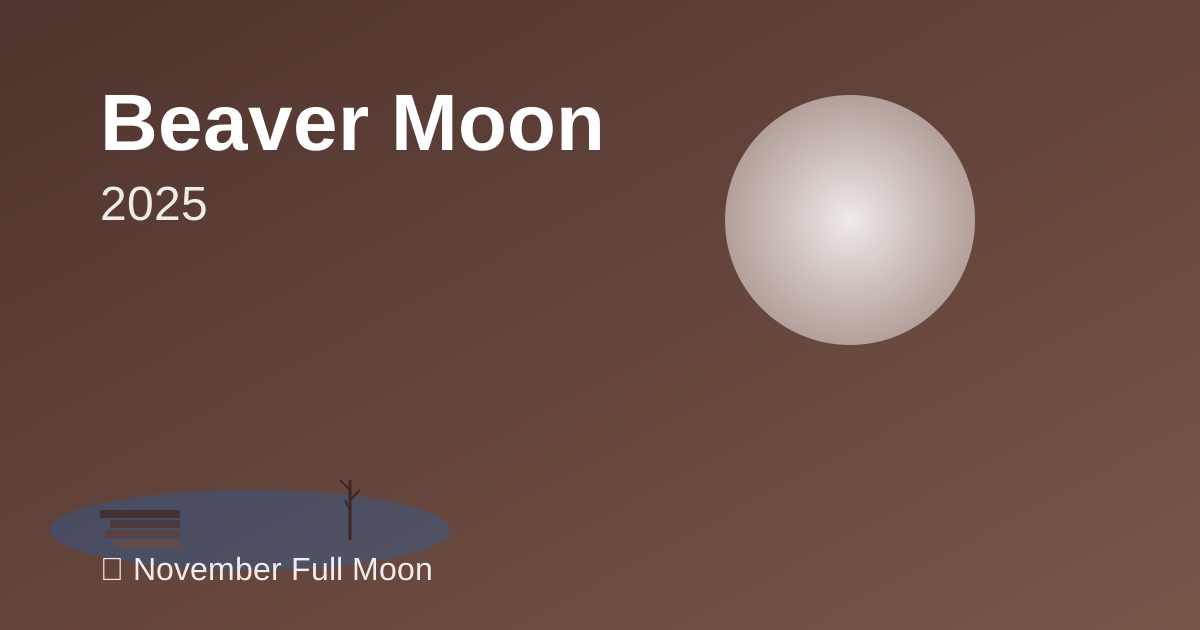
🌕 Beaver Moon – 2025 – Full Moon on November 5, 2025
The full moon in November 2025, traditionally known as the Beaver Moon, will illuminate the night sky on 2025 – Full Moon on November 5, 2025. This celestial event marks a special time for stargazers and moon enthusiasts around the world.
📅 Full Moon Details
- Date: 2025 – Full Moon on November 5, 2025
- Lunar Age: ~14.5 days
- Moonrise: 2:58 AM EST
- Moonset: 4:24 PM EST
Times shown in Eastern Standard Time (EST) for New York, USA.
🌙 Best Viewing Times and Locations
The best time to view the Beaver Moon is during moonrise and throughout the night when the moon is highest in the sky. Here are some tips for optimal viewing:
- Moonrise: The moon will appear largest and most dramatic as it rises above the horizon, typically around sunset
- Peak Viewing: Around midnight when the moon reaches its highest point in the sky
- Best Locations: Open areas away from city lights, such as:
- Parks: Central Park (NYC), Golden Gate Park (San Francisco), Griffith Observatory (Los Angeles)
- Beaches: Any east-facing beach provides excellent moonrise views
- High elevations: Mountains and hills offer clear, unobstructed views
- Dark sky locations: Away from urban light pollution for the best star visibility alongside the moon
- Weather: Check local weather forecasts for clear skies to ensure the best viewing experience
✨ Constellation Guide: Scorpius ♏
During the Beaver Moon in November, look for the constellation Scorpius in the night sky.
The Scorpion – Visible low in the southern sky during late autumn. The bright red star Antares marks the scorpion’s heart.
Stargazing Tips:
- Use a star chart or astronomy app (like Stellarium, SkySafari, or Star Walk) to help locate Scorpius
- Allow your eyes 20-30 minutes to adjust to the darkness for optimal viewing
- The bright full moon may make it harder to see faint stars, but major constellations will still be visible
- Binoculars or a small telescope can enhance your viewing experience and reveal lunar surface details
- Best viewing is after midnight when the moon is high and atmospheric distortion is minimal
🗓️ Monthly Moon Calendar
View the complete moon phase calendar for November 2025 to track all lunar phases throughout the month:
🌕 Why is it called the Beaver Moon?
November’s full moon is called the Beaver Moon because this was the time to set beaver traps before the swamps froze, ensuring a supply of warm furs for winter. It’s also called the Frost Moon.
📸 Moon Photography Tips
The Beaver Moon is an excellent opportunity for moon photography. Here are professional tips for capturing stunning lunar images:
- Equipment:
- DSLR or mirrorless camera with manual controls
- Telephoto lens (200mm or longer for close-up detail)
- Sturdy tripod (essential for sharp images)
- Remote shutter release or use 2-second timer to avoid camera shake
- Camera Settings:
- ISO: 100-400 (keep it low to reduce noise)
- Aperture: f/8-f/11 (for sharpness across the lunar surface)
- Shutter Speed: 1/125 to 1/250 second (the moon is brighter than you think!)
- Focus: Manual focus to infinity, then fine-tune on the moon’s edge
- Shoot in RAW format for maximum editing flexibility
- Composition Tips:
- Moonrise shots: Include foreground elements like trees, buildings, or landscapes
- Use the “rule of thirds” to position the moon in your frame
- Capture the moon when it’s lower on the horizon for dramatic perspective
- Try a sequence showing the moon’s movement across the sky
- Best Time to Shoot:
- During moonrise for golden hour lighting on foreground elements
- Blue hour (just after sunset) for beautiful color contrast
- When moon is 10-20° above horizon for interesting atmospheric effects
🔭 Interesting Facts About the November Full Moon
- The full moon appears about 14% larger and 30% brighter when it’s at its closest point to Earth
- A full moon rises around sunset and sets around sunrise
- The moon’s gravitational pull causes higher-than-average “spring tides” during full and new moons
- Each full moon occurs approximately 29.5 days apart (one lunar month)
- Despite appearing very bright, the moon only reflects about 12% of the sunlight that hits it
Don’t miss this month’s full moon! Check our daily moon phase tracker for current moon information and visit our November 2025 calendar to plan your moon viewing throughout the month.
Share this: Planning to watch the Beaver Moon? Share your moon photos and viewing experiences with fellow astronomy enthusiasts!